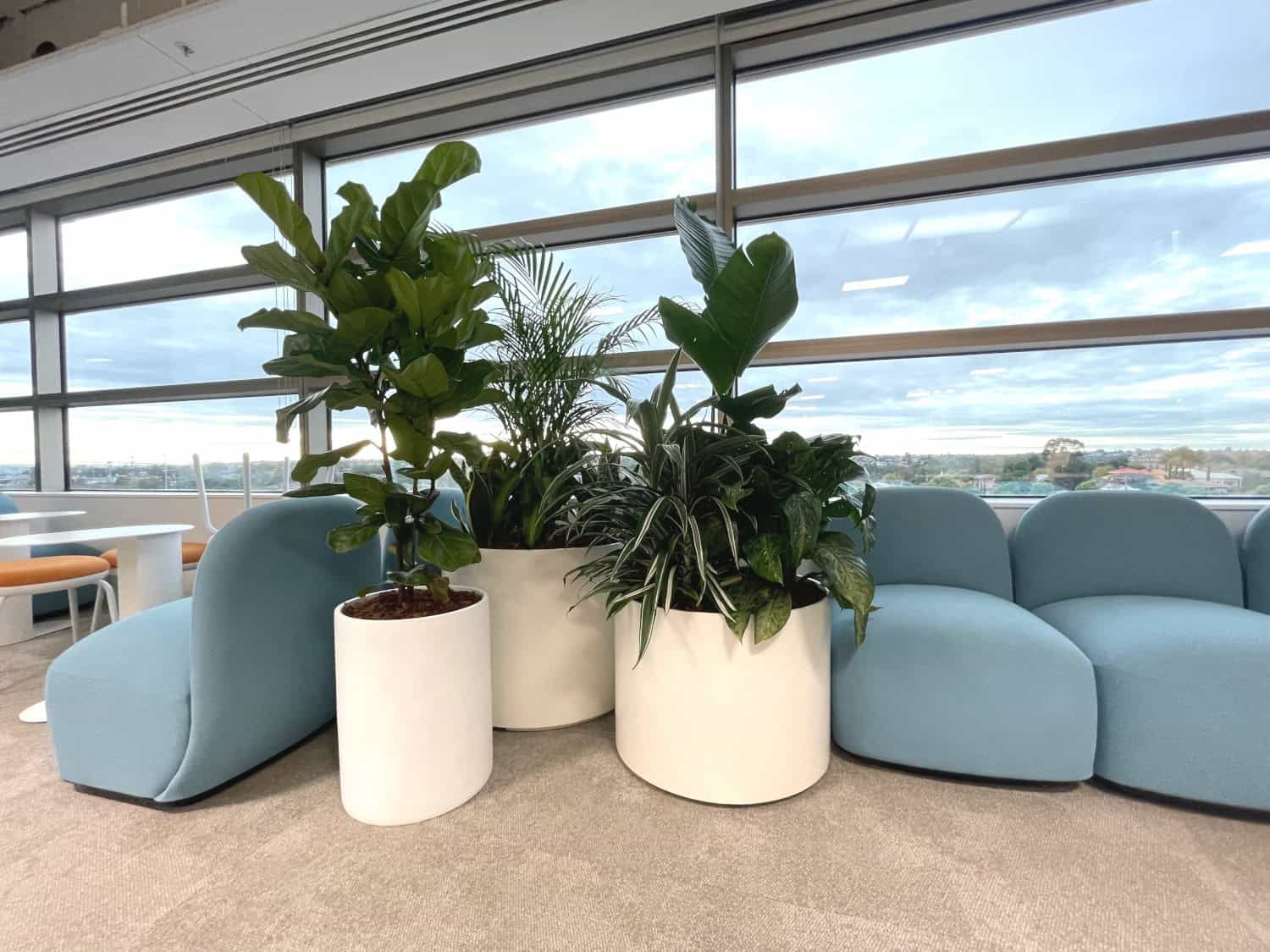
Indoor plant installation is set by decisions already locked in during a fit-out. By that stage, office conditions such as light access, airflow, and circulation determine where plants can realistically sit and how they can be maintained.
Those constraints determine how evenly the space holds up after handover.

How Plant Installation Fits Into the Design Process
By the time indoor plant installation is introduced, placement is working around fixed layouts.
What appears balanced in a design plan can create gaps in servicing on-site. Plants positioned behind workstations or along tight circulation paths are serviced less consistently, which becomes visible over time.
We position planting where access is uninterrupted and where light remains stable across the day, particularly in areas that influence how the space is read on entry.
What Happens During Commercial Plant Installation
Each commercial plant installation starts with a site review that considers light, access and the space’s daily use.
Light conditions change throughout the day. If plant selection does not suit those conditions, plants can decline quickly and ongoing maintenance becomes more challenging.
Across larger floor plates, usable light drops off quickly beyond perimeter glazing. Plants placed deeper into the space often require a higher replacement frequency (unless species selection is adjusted to those conditions).
Airflow also plays a role. Plants positioned near vents or within heavily conditioned zones tend to dry out faster, which shortens their lifespan.
On-site, placement is adjusted to account for this:
- Plants are pulled toward the stable light zone
- Positions are shifted away from direct airflow
- Groupings are spaced to maintain clear servicing access
Industry Insight: Why Replacement Rates Vary Across the Same Floor
Replacement rates are rarely consistent across a floor plate. Plants closer to glazing hold condition, while those positioned deeper into conditioned zones cycle out faster due to lower light and air movement.
The Rise of Spec Fit-Outs in Melbourne
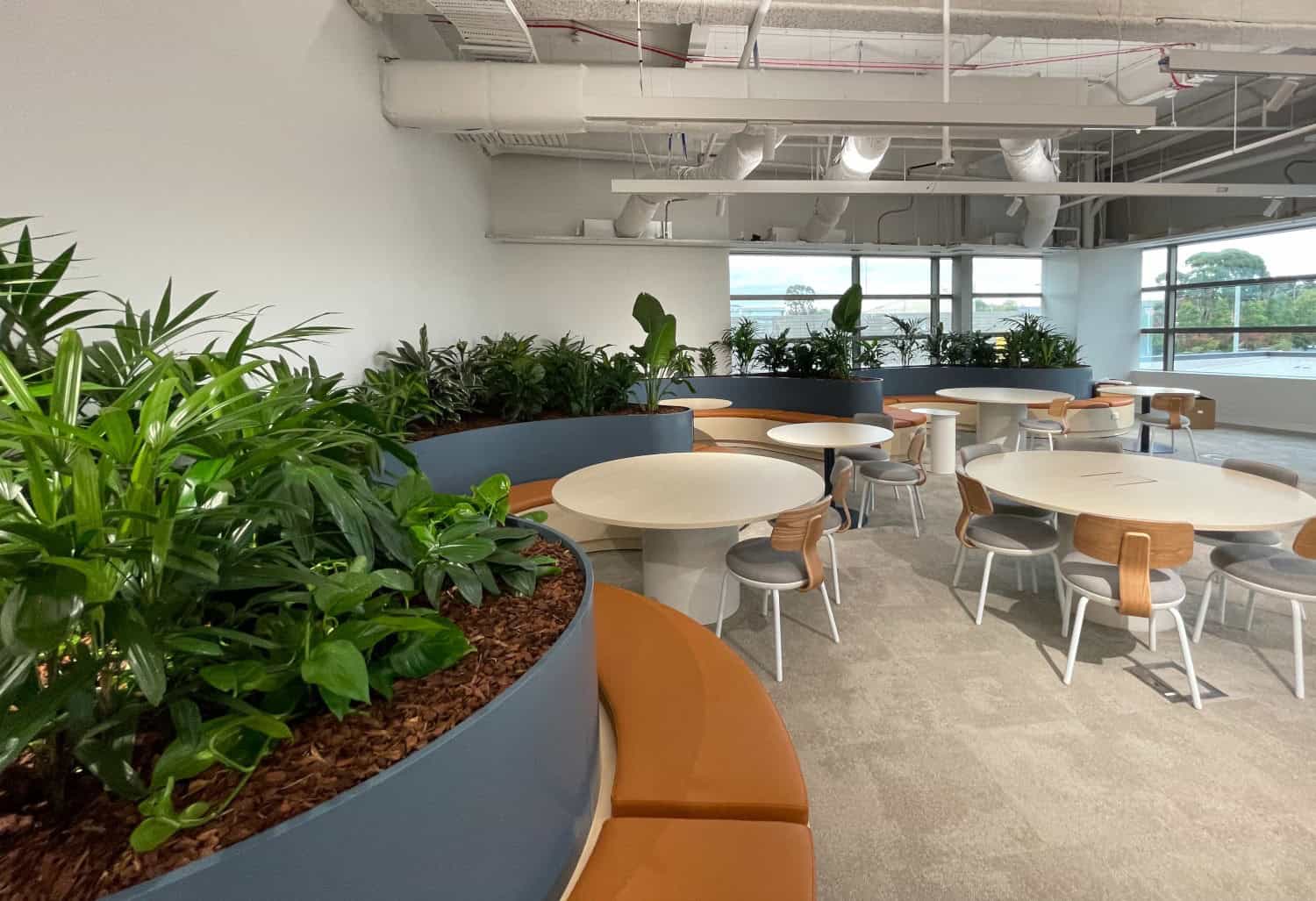
how indoor plant installation is planned, as planting needs to function across different potential layouts without knowing the end tenant.
Placement is resolved during the build phase and needs to hold through inspections and leasing periods. Planting introduces structure without locking in a specific use.
We work directly with fit-out teams to integrate planting into the base build, aligning placement with how the space is evaluated during walkthroughs:
- Entry areas that frame first impressions
- Shared zones that signal how the space can be used
- Meeting areas that anchor the layout without fixing it
In these projects, planting is expected to perform without adjustment, which makes early placement decisions more critical than in tenant-led fit-outs.
What Gets Overlooked During Multi-Site Rollouts
Plant installation becomes harder to control once it’s rolled out across multiple locations. What works in one office often doesn’t translate directly to another due to differences in light exposure, floor depth, and servicing access.
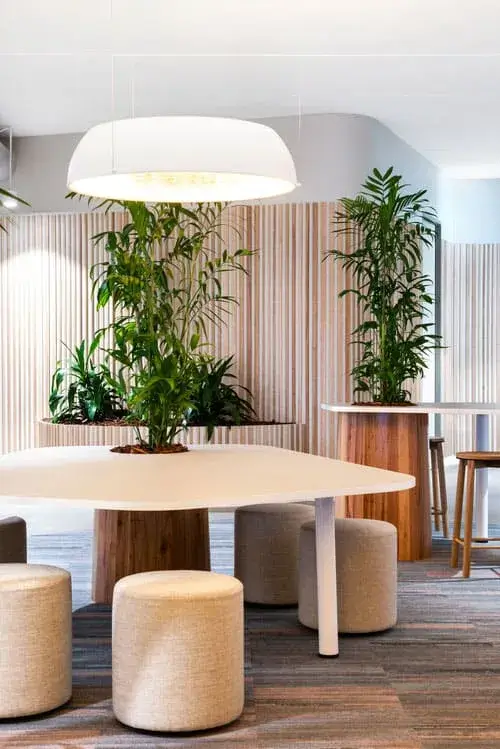
We standardise placement principles rather than replicate layouts. This keeps the look consistent without forcing plants into conditions that won’t hold. We also work with themed layouts and colour palettes to ensure plants and planters fit with themed decor.
Where Installations Start to Fail
Plants positioned outside viable light zones or within restricted access areas require more frequent attention. Where servicing becomes inconsistent, decline shows unevenly across the space.
This links back to:
- Light mismatch across zones
- Restricted servicing paths
- No replacement cycle aligned to conditions
Planning for Maintenance From Day One
Our plant selection accounts for how each zone performs across the day. Placement allows for access without disruption and replacement cycles are aligned to those conditions. We manage plant condition, rotation, and replacement after installation, removing the need for internal follow-up.
For most clients, this sits within ongoing office plant hire, where maintenance is integrated into how the space is managed. Learn more about our office plant hire service.
Choose a Provider With Commercial Experience
With over 135 years in operation and three generations of family leadership, we plan installation and maintenance based on what performs reliably in commercial environments. Frenchams manages design, installation, and maintenance as a single service, so placement, servicing access, and replacement are cohesively planned. This avoids the gaps that appear when installation and maintenance are treated as different scopes.
Plan a Practical Next Step With Frenchams
If you are planning a fit-out or reviewing your current setup, we can assess how indoor plant installation will perform within your space, including placement constraints, servicing access, and likely replacement patterns. Contact us today for a free consultation to review your layout and we’ll provide the next steps.